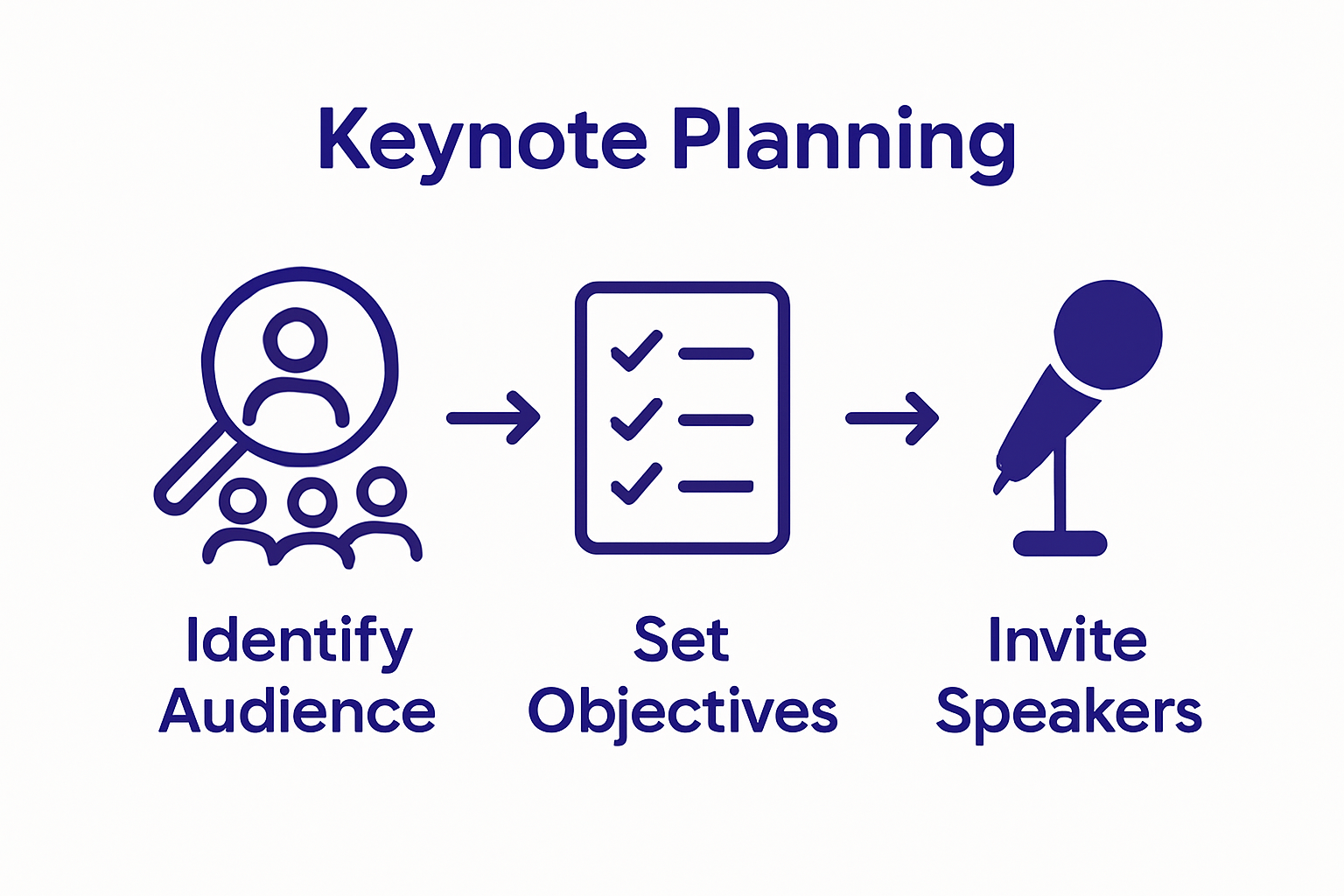
The initial phase involves conducting comprehensive audience research that goes beyond superficial demographics. Professional event organisers must dig deeper to uncover the motivations, challenges, and expectations driving their participants. This means examining professional backgrounds, career stages, industry trends, and specific knowledge gaps that your keynote session can address.
According to research from the Education Resources Information Center, effective event planning hinges on understanding participants’ specific interests and prior knowledge. Start by gathering intelligence through multiple channels: pre-event surveys, industry network consultations, organisational insights from your client, and direct conversations with potential attendees. These interactions reveal nuanced insights that standard registration forms cannot capture.
Key intelligence gathering methods include:
- Professional network discussions
- Structured online surveys
- Direct interviews with organisational representatives
- Analysis of recent industry reports and trend publications
Carefully map out audience personas that represent different participant segments. Each persona should capture professional context, learning objectives, potential challenges, and anticipated session outcomes. This granular approach allows keynote speakers to craft narratives and content that resonate deeply with diverse audience members.
Verification of your audience understanding comes through precise content alignment. When your keynote session material directly addresses the mapped personas’ specific needs, you will observe heightened engagement signals: attentive listening, active note-taking, increased Q&A participation, and post-session follow-up conversations. These indicators confirm that your audience research has successfully translated into meaningful, impactful content.